The Ticking Time Bomb on American Highways: Why Eliminating Vehicle Safety Inspections Is a Costly Mistake
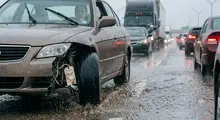
Imagine driving down a major highway at 70 miles per hour. The traffic is dense, the weather is unpredictable, and your safety depends entirely on one critical assumption: that the thousands of heavy steel machines hurtling around you have functional brakes, structural integrity, and tires capable of gripping the asphalt.
For decades, state-mandated periodic vehicle safety inspections provided a baseline insurance policy for that assumption. They ensured that even if a driver was negligent, a certified mechanic would look under the hood once a year to flag bald tires, rotted brake lines, and broken suspension components before they caused a catastrophe.
However, a dangerous legislative trend is sweeping across the United States. Driven by anti-regulatory rhetoric and promises of consumer convenience, a growing number of states are dismantling their inspection programs. The most prominent domino to fall is Texas, where House Bill 3297 officially eliminated mandatory annual vehicle safety inspections for noncommercial vehicles [1].
By shifting the burden of safety entirely onto the individual, lawmakers are playing a high-stakes gamble with human lives. The reality is clear: eliminating vehicle safety inspections will make our roads significantly more dangerous.
The Current Landscape: A Map of Deregulation
The United States is rapidly becoming a patchwork of unverified vehicular safety. Decades ago, nearly every state required some form of periodic motor vehicle inspection (PMVI). Today, the number of states upholding rigorous annual safety mandates has dwindled to a small minority.
Currently, only about 13 states—including Pennsylvania, New York, Virginia, and North Carolina—maintain comprehensive, statewide annual safety inspection programs for passenger cars. The rest have either abandoned them entirely or never implemented them, focusing instead exclusively on emissions testing to meet federal environmental standards.
Texas's decision to join the non-inspection ranks represents a seismic shift. As the second-most populous state in the nation, with over 22 million registered vehicles, the Lone Star State’s legislative shift removes a critical line of defense for millions of motorists [1]. What's worse, Texas is not alone; states like Utah eliminated their safety inspection programs in recent years, and lawmakers in several other states regularly introduce bills aiming to replicate these rollbacks under the guise of cutting "red tape."
The Illusion of Savings: The Political Argument Explained
To understand why this trend is accelerating, we must look at the arguments driving deregulation. Proponents of eliminating safety inspections generally rely on two main selling points: saving money and saving time.
In Texas, lawmakers championed HB 3297 as a victory for the working class [1]. Prior to the rollback, a safety inspection cost drivers a nominal fee of $7.00. Proponents argued that eliminating the inspection removes an unnecessary bureaucratic hurdle and puts money back into the pockets of everyday Texans [1, 4].
However, a closer look at the legislation reveals a glaring paradox: the state kept the fee.
While drivers no longer have to take their vehicles to a shop to verify that their brakes and lights work, they are still required to pay a $7.50 "state safety fee" directly to the DMV during their annual vehicle registration. The program wasn't eliminated to save drivers money; it was eliminated to save them a trip to the mechanic, transforming a safety initiative into a pure administrative tax.
Furthermore, free-market think tanks frequently cite a widely circulated study arguing that vehicle defects account for only a tiny fraction of total roadway accidents [4]. They claim that human error—such as distracted driving, speeding, and driving under the influence—is the overwhelming cause of crashes [4]. Therefore, they argue, maintaining an expensive apparatus to catch mechanical failures yields a negligible return on investment [4].
While this logic sounds appealing on paper, it relies on fundamentally flawed assumptions and a dangerous misunderstanding of how preventative safety works.
Why Eliminating Inspections Will Cost Lives
When governments eliminate mandatory safety checks, they ignore the reality of human behavior and vehicle depreciation. Here is why removing these programs is a direct recipe for increased roadway fatalities:
1. The Flaw of "Self-Regulation" and Deferred Maintenance
The core argument for deregulation assumes that vehicle owners will voluntarily maintain their cars in peak mechanical condition. This is an extraordinarily naive assumption.
With inflation driving up the cost of living, car repairs are often the first items cut from a household budget. A driver living paycheck to paycheck may notice their car takes a little longer to stop, or that their tires are wearing smooth. Without the legal mandate of an annual inspection to force their hand, many drivers will defer critical maintenance indefinitely.
The annual inspection acted as an objective, third-party reality check. It forced drivers to address catastrophic mechanical risks—like metal-on-metal brake pads or compromised steering linkages—before hitting public roads.
2. Underreporting the True Role of Mechanical Failure
Anti-inspection advocates love to claim that mechanical failures cause less than 2% to 3% of crashes [5]. However, traffic safety experts know that this statistic is severely flawed due to how accident data is collected.
When a police officer responds to a high-speed highway collision, their primary objective is to clear the scene, document basic facts, and look for obvious signs of driver impairment or traffic violations. Officers are not forensic mechanics. They rarely dismantle a crashed vehicle’s braking system or test the hydraulic fluid to see if a mechanical failure preceded the driver's loss of control. Consequently, thousands of crashes blamed on "speeding" or "losing control" are actually triggered by bald tires hydroplaning or a rusted brake line failing under pressure.
3. The $2 Billion Data Point Lawmakers Ignored
Before Texas rushed to eliminate its inspection program, the state commissioned an exhaustive study to evaluate the real-world impact of the program. The University of Texas at Austin's Center for Transportation Research (CTR) conducted a deep dive into state inspection databases, crash costs, and economic factors [2].
The CTR study concluded with a definitive warning: average crash costs related to vehicles with defects in Texas exceeded $2 billion per year [2]. Crucially, the researchers found that the vast majority of these costly crashes involved vehicle components that would have explicitly failed a standard safety inspection [2]. Based on these catastrophic financial and human metrics, the Center for Transportation Research "strongly recommended that the inspection program be retained" [2].
Lawmakers ignored the science, prioritizing political convenience over data-driven public safety.
4. What Global Epidemiological Data Tells Us
When you zoom out from American state politics and look at global public health data, the value of vehicle inspections becomes undeniable. A comprehensive systematic review published in the International Journal of Environmental Research and Public Health analyzed dozens of observational and case-control studies regarding periodic vehicle inspections [3].
The findings were stark: case-control data revealed a profound, statistically significant association between traffic crashes and the absence of a valid vehicle inspection certificate [3]. Specifically, one major study highlighted within the research found that the risk of a severe or fatal crash was 2.7 times higher for drivers operating a vehicle without a valid inspection certificate compared to those with a certified safe vehicle [5].
The message from epidemiologists is clear: when you systematically stop inspecting cars, the rate of severe road injuries and fatalities goes up.
The Unequal Burden: Who Suffers Most?
The elimination of vehicle inspections does not affect all drivers equally. It creates an environment where affluent drivers in newer cars with advanced automated safety features remain relatively protected, while lower-income drivers and pedestrians bear the brunt of the risk.
The Threat of the Aging Fleet
The average age of passenger cars on American roads has climbed to an all-time high of over 12 years. Older cars are vastly more susceptible to catastrophic material degradation, such as rusted frames, failing ball joints, and degraded brake lines. By removing mandatory checks, states are allowing an aging fleet of unverified vehicles to share high-speed corridors with families, cyclists, and pedestrians.
A Nightmare for Pedestrians and Cyclists
Mechanical failures don't just threaten the occupants of the defective car. If a driver’s brakes fail or their windshield wipers are completely dry-rotted during a heavy downpour, the people most at risk are the pedestrians in the crosswalk or the cyclist on the shoulder.
An inspection checks that headlights are properly aimed, that brake lights illuminate instantly, and that tires have enough tread depth to stop short of a sidewalk. Eliminating these checks strips vulnerable road users of their right to a baseline standard of safety.
Conclusion: A Retrograde Step for Public Safety
At a time when traffic fatalities in the United States remain stubbornly high, public policy should be focused on deploying every available tool to make roads safer. We mandate seatbelts, engineer advanced crumple zones, build smart infrastructure, and strictly penalize impaired driving.
To simultaneously state that the mechanical viability of a 4,000-pound vehicle traveling at highway speeds is "not the government's concern" is a bizarre and dangerous contradiction.
The legislative shift spearheaded by Texas and mirrored across the country is a profound step backward for public health. Saving a driver an hour of time once a year is not worth the multi-billion-dollar toll in property damage, severe injuries, and lost human lives [2].
If we value safe communities, we must demand that lawmakers look at the data, listen to transportation engineers, and reverse this dangerous trend before more preventable tragedies occur on our highways.
References
- Texas Commission on Environmental Quality. (2025). State Implementation Plan Revision for Adoption: House Bill 3297 and Senate Bill 2102 Implementation. https://www.tceq.texas.gov/downloads/agency/decisions/agendas/backup/2025/2025-0211-sip-ado.pdf
- Center for Transportation Research at The University of Texas at Austin. (2022). Economic and Safety Considerations: Motor Vehicle Safety Inspections for Passenger Vehicles in Texas. Research Report Commissioned for the Texas Department of Transportation. https://rosap.ntl.bts.gov/view/dot/66897
- Martín-delosReyes, L. M., Lardelli-Claret, P., García-Cuerva, L., Rivera-Izquierdo, M., Jiménez-Mejías, E., & Martínez-Ruiz, V. (2021). Effect of Periodic Vehicle Inspection on Road Crashes and Injuries: A Systematic Review. International Journal of Environmental Research and Public Health, 18(12), 6476. https://doi.org/10.3390/ijerph18126476
- Texas Public Policy Foundation. (2018). Costs of Texas' Passenger Vehicle Safety Inspection. https://www.texaspolicy.com/wp-content/uploads/2018/08/PB-Costs-of-Texas-Passenger-Vehicle-Safety-Inspection.pdf
- Fosser, S., Blows, S., & Das, A. (Various Studies Cited via Traffic Safety Research). (2024). The effect of periodic vehicle inspection on road traffic crash risk. Traffic Safety Research Journal, 26, 109-115. https://tsr.international/TSR/article/download/26109/23586/71407